The closure of Silicon Valley Bank highlights the negative impact of the Fed’s aggressive interest rate hike.
Xinhua News Agency, new york, March 10 th Summary: The closure of the Silicon Valley Bank highlights the negative impact of the Fed’s aggressive interest rate hike
Xinhua News Agency reporter Liu Yanan
California Financial Protection and Innovation Bureau announced on the 10th that it has taken over Silicon Valley Bank, a regional bank that mainly serves start-ups, and appointed the Federal Deposit Insurance Corporation to conduct liquidation management for Silicon Valley Bank, because the liquidity and solvency of Silicon Valley Bank are insufficient. This is the biggest bank closure in the United States since September 2008.
Silicon Valley Bank is a state-owned commercial bank headquartered in Santa Clara, California. It is a member of the Federal Reserve System and has 17 branches in California and Massachusetts. As of December 31, 2022, the total assets of Silicon Valley banks were about $209 billion and the total deposits were about $175.4 billion.

This is the bank logo taken outside the headquarters of Silicon Valley Bank in Santa Clara, California, USA on March 10th. (Xinhua News Agency, photo by Li Jianguo)
The Federal Deposit Insurance Corporation said on the 10th that in order to protect the insured depositors, it has set up a special institution to receive the insured deposits of Silicon Valley banks, and will allow the insured to get back the deposits before noon on the 13th. For uninsured depositors, the Federal Deposit Insurance Corporation will pay dividends as compensation.
On the 8th of this month, Silicon Valley Bank Financial Group, the parent company of Silicon Valley Bank, sold about $21 billion in portfolio assets, resulting in a loss of about $1.8 billion. Since then, the bank tried to sell a total of 2.25 billion US dollars of stock financing, which caused its share price to plummet by more than 60% on the 9th and was forced to stop trading on the 10th.
Analysts said that the closure of the Silicon Valley Bank highlighted the negative impact of the aggressive interest rate hike by the Federal Reserve. The banking business in Silicon Valley is concentrated in the fields of science and technology, venture capital, etc. Compared with traditional banks, it relies less on individual depositors’ deposits. Aggressive interest rate hikes by the Federal Reserve have led to a decline in bond prices, a rapid loss of deposits in commercial banks and an increase in financing costs. In this context, Silicon Valley banks are not ready, which leads to the current predicament.
Silicon Valley banks are not the only ones facing this dilemma. The Federal Deposit Insurance Corporation has previously warned that the current interest rate environment may have serious consequences for the banking industry, and financial institutions such as American commercial banks may face a total loss of 620 billion US dollars due to the sale or holding of various financial products.
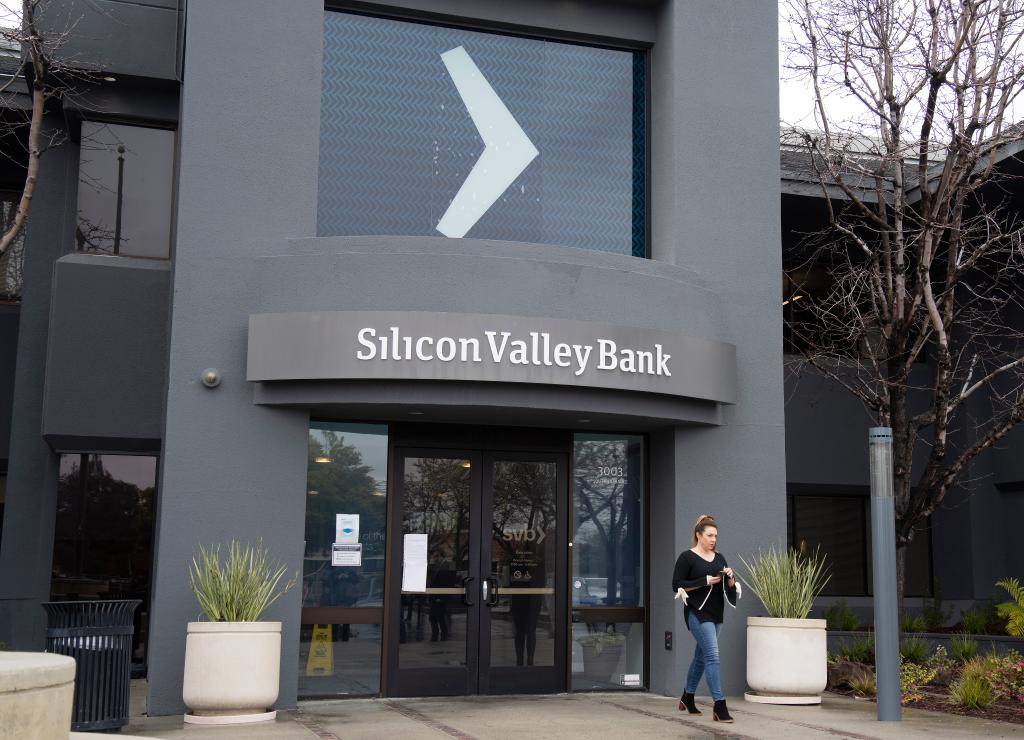
This is the entrance to the headquarters of Silicon Valley Bank filmed in Santa Clara, California, USA on March 10th. (Xinhua News Agency, photo by Li Jianguo)
After the closure of the Silicon Valley Bank, some investors worried that this incident might spread to other financial institutions and even lead to larger financial risks. Paul ashworth, the chief American economist of Kaitou Macro, a market research institution, believes that the losses of commercial banks in holding financial products are unlikely to become systemic problems. Mark Hefer, global chief investment officer of UBS Group AG Wealth Management, also said that after the closure of Silicon Valley Bank, there are no signs of risk spread such as pressure on the interbank market.
On the 10th, US Treasury Secretary Yellen called the heads of the Federal Reserve, the Federal Deposit Insurance Corporation and other institutions to meet to discuss the relevant arrangements after the closure of Silicon Valley Bank. Yellen said in a statement that the US banking system is still resilient and regulators have effective tools to solve such incidents.