By the end of 2021, the National Hope Project had received a total of 19.42 billion yuan in donations.

Cctv newsOn April 21st, the State Council Press Office released the white paper "China Youth in the New Era" and held a press conference.It was introduced at the meeting that Project Hope, initiated by the Central Committee of the Communist Youth League and implemented by the China Youth Development Foundation, is a social welfare undertaking with the mission of improving basic education facilities in poverty-stricken areas and helping out-of-school teenagers in poverty-stricken areas to return to school. By the end of 2021, the National Hope Project had received a total of 19.42 billion yuan in donations, aided 6.626 million students from poor families and built 20,878 Hope primary schools.

In recent years, Project Hope has been adhering to the tradition of assisting students to educate people, and launched five plans, namely, assisting students to promote education, protecting health, improving quality, providing emergency assistance, and cultivating people by casting souls, and explored the implementation of public welfare projects such as "Hope Kitchen" and Red Research Camp, which effectively promoted the development of education in poor areas and served the growth of young people from poor families.

2019 is the 30th anniversary of the implementation of Project Hope. General Secretary of the Supreme Leader sent a message to Project Hope, spoke highly of its important role in helping to overcome poverty, promoting the development of education, serving the growth of young people, and leading the social fashion, and stressed that the cause of Project Hope should be done better, and efforts should be made to provide new help and sow new hope for young people, so that the majority of young people can fully feel the care of the party and the warmth of the socialist family.

The central bank lowered the RRR and cut interest rates officially, and the policy interest rate dropped the most in the past four years.

Release long-term liquidity of about one trillion yuan.
Yangcheng Evening News Reporter Dai Manman reports: The central bank lowered the RRR and cut interest rates officially! The People’s Bank of China announced on the 27th that it has decided to reduce the deposit reserve ratio of financial institutions by 0.5 percentage point from September 27th, 2024 (excluding financial institutions that have implemented the 5% deposit reserve ratio). After this reduction, the weighted average deposit reserve ratio of financial institutions is about 6.6%, which is expected to release about one trillion yuan of long-term liquidity. On the same day, official website, the central bank, issued an announcement on the open market business, reducing the operating interest rate of 7-day reverse repurchase in the open market by 0.2 percentage points, from the previous 1.70% to 1.50%.
According to the analysis, after Politburo meeting of the Chinese Communist Party pointed out on 26th that "the deposit reserve ratio should be reduced and the interest rate should be cut vigorously", the central bank simultaneously implemented the RRR cut and interest rate cut, which fully reflected the determination to increase the intensity of monetary policy regulation and control and strive to achieve the goal of economic and social development throughout the year with practical actions.
According to market analysis, the central bank once again announced the interest rate cut by adjusting the 7-day reverse repurchase operating rate in the open market, which further confirmed the reform direction of the central bank to improve the market-oriented interest rate regulation mechanism. The 7-day reverse repurchase operating rate has basically assumed the function of the main policy interest rate.
"This policy interest rate reduction is the largest in the past four years, which is an important embodiment of supportive monetary policy and will reduce the comprehensive financing cost of society through transmission." Dong Ximiao, chief researcher of Zhaolian, said that the policy interest rate was lowered by 20 basis points, which reflected the requirement of "strength". Under the market-oriented interest rate regulation mechanism, the benchmark interest rates in various markets will be lowered. It is expected that this policy interest rate reduction will also guide the deposit interest rate and the loan market quotation rate (LPR) to go down simultaneously, and keep the net interest margin of commercial banks stable. At the same time, interest rate cuts will promote the reduction of comprehensive financing costs of the real economy and support stable economic growth.
It is worth noting that the time when the central bank announced the RRR cut and interest rate cut before the market also triggered market discussion. Dong Ximiao believes that the announcement of interest rate cuts at 8: 00 a.m. is conducive to maintaining the continuity of policy intensity, further consolidating the consensus on high-quality development, laying a solid foundation for the continued stability of the capital market, and providing sufficient impetus for the healthy and upward development of the market.
The central bank said that it would stick to a supportive monetary policy stance, increase the intensity and accuracy of monetary policy regulation, and create a good monetary and financial environment for China’s stable economic growth and high-quality development.
Reporting/feedback

The referee commanded the "racing family" to race at a speed of 140 yards per hour in the urban area, and the trucks on the side avoided retrograde.

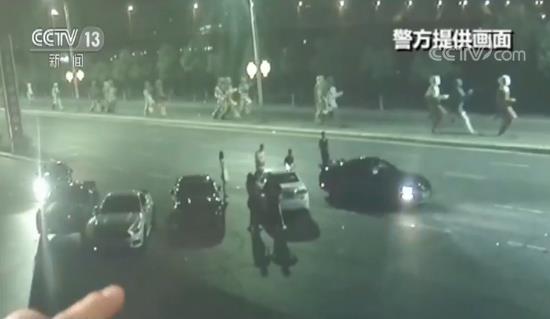
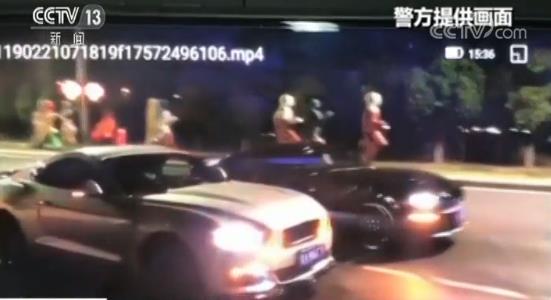
  CCTV News:Recently (2 nd), the Traffic Management Bureau of Nanchang Public Security Bureau of Jiangxi Province reported a car racing case in the city. These racers race cars late at night every day and are commanded by referees, which seriously affects the road traffic safety order and brings great security risks to people’s travel.

  From July last year to April this year, the command center of Nanchang Public Security Traffic Management Bureau in Jiangxi Province received nearly 100 reports, most of which were reported during the early hours of the morning when people were asleep. After investigation, the police found that those who had been racing in Nanchang for a long time were a group of "racing families" with professional sports cars. They always chose to race after the traffic police got off work late at night.

  Li Longji, Command Center of Traffic Management Bureau of Nanchang Public Security Bureau: "The models belong to the middle and high-end models, and these models have undergone some modifications. Two cars that have just left have appeared, and it is very fast. Through this speed measuring device, it is measured that its top speed is about 140 yards (km/h), and the current speed limit of this road is 60 yards (km/h). "

  Through monitoring along the road, the police learned that only on the night of the investigation, the driver carried out seven consecutive racing races in the form of two-car competition, and the illegal racing time was as long as 40 minutes. In the process of chasing racing, these modified sports cars are still holding down the middle line of the road, which is very dangerous. Even the trucks passing by have to avoid their retrograde.

  The police also saw through another surveillance video that this group of "racing families" not only raced two cars, but also called participants to park their cars in a row to form a small racing track, and each car drifted in the middle of the road one by one. During the police investigation, a large number of racing videos uploaded by this group of motorists were also found on the Internet, and there were many racing enthusiasts around.

  Li Longji, Command Center of Traffic Management Bureau of Nanchang Public Security Bureau: "In fact, their behavior has violated our Criminal Law of the People’s Republic of China, which has constituted such an act of dangerous driving. According to our Criminal Law of People’s Republic of China (PRC), the crime of dangerous driving will be punished with one to six months of criminal detention."

The "military parade" by the president of Shandong University of Science and Technology caused controversy among netizens (Figure)


  On September 18th, Wang Chunqiu, president of Shandong University of Science and Technology, held a military parade.


  Xinhuanet Shandong Channel September 27 (Reporter Zhang Xiaojing) Recently, the president of Shandong University of Science and Technology took a military parade to review the posts of military training freshmen.


  The spread on the Internet has aroused some netizens’ resentment and doubts. The responsible comrades of Shandong University of Science and Technology said in an interview that the principal’s military parade by car is common in military training in colleges and universities, and there is nothing wrong with it.


  On September 18th, Shandong University of Science and Technology held a military training closing ceremony. President Wang Chunqiu and army leaders reviewed more than 5,000 trainees in a military parade. After the photos of the freshmen were posted on the Internet, some netizens resented it. Some netizens thought that it was a sacred thing to review the team by military parade, and they could not understand why the president of the university military training had to parade like this.


  The responsible comrades of the Propaganda Department of Shandong University of Science and Technology said that military training is a compulsory course in the school, and "military parade" is a normal part of military training. All links of military training are carried out under the guidance of the army, and there is nothing wrong with it. At the closing ceremony, the military parade of school leaders by car was not initiated by Shandong University of Science and Technology, and many colleges and universities did it during military training. Shandong University of Science and Technology has been engaged in military training for freshmen for many years. When the number of students is small, the leaders of the school and the army walk to review. Only last year did they begin to review by military parade, mainly because there are too many freshmen trained. If the review time on foot is too long.


  A comrade in charge of publicity said that students and teachers of Shandong University of Science and Technology were not dissatisfied with this practice, and the school could not figure out why it was questioned by netizens. The person in charge said: "At present, there is no clear stipulation that it is forbidden to parade by car during military training for freshmen in colleges and universities. This incident is really unexpected. "


  Some netizens think that the headmaster is so "parade", it is better to walk into the students and really understand their study life.

Editor: xu wen hua

The railway department responded that "many high-speed trains became dirty on foggy days"

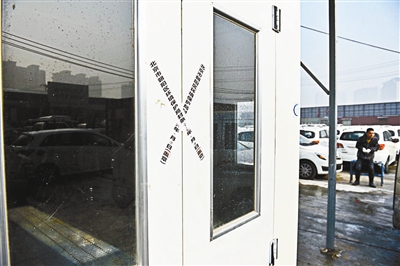
  Beijing Traffic Law Enforcement Corps and Chaoyang District Environmental Protection Department jointly seized spray booth Photography/Our reporter Huang Liang

  Yesterday, traffic in Beijing and neighboring provinces was affected by foggy weather. The morning rush hour public transport in Beijing has been seriously affected, with 31 buses going around the station, and the subway ground line taking measures to slow down due to heavy fog, and a large number of passengers are stranded in the subway station. In addition, yesterday morning, most expressways in Beijing were closed, resulting in flight delays at several airports in North China.

  According to yesterday’s notification from the Ministry of Environmental Protection, a total of 72 cities in Beijing, Tianjin and Hebei, surrounding areas and Shaanxi Province have started yellow and above warnings for heavy pollution, of which 32 cities maintain or issue red warnings, 27 cities maintain or issue orange warnings, and 13 cities maintain or issue yellow warnings.

  subway

  Heavy fog caused a large number of passengers stranded in Fangshan line.

  Yesterday morning rush hour in Beijing caused most of the high-speed roads in the city to be closed, and many motorists switched to public transport, resulting in an increase in subway passenger flow. Because of the heavy fog, the Fangshan line on the ground runs at a reduced speed, resulting in a large number of passengers gathering. Some passengers reported that they waited for about an hour on Fangshan Line and were late for work. Beijing Youth Daily reporter learned from the Beijing Subway Company that in order to alleviate the pressure of early peak passenger flow, nine trains were added to Fangshan Line, and empty cars were added at the fenced house station with more passenger flow. At 9 o’clock in the morning, the subway operation order gradually returned to normal.

  Yesterday morning rush hour was affected by heavy fog, and Beijing morning rush hour traffic was seriously affected. Because of the fog, the ground line Fangshan line runs at a reduced speed. Some passengers reported that the subway Changyang Station and Fenlifang Station were slow to enter the station. A number of passengers reported that it was about an hour late for the stop-in current limit and speed-down operation.

  Due to the current restriction measures taken by some stations, the subway has prepared delay instructions for passengers, and the stations requested by passengers have actively distributed them to passengers. In the Guogongzhuang station area, nearly 200 delay instructions have been distributed to passengers in need.

  Zhao Xincun, head of the sub-station of Fangshan Line, said that yesterday’s fog directly affected the operation of the first bus, and the first bus took measures to slow down, but the passenger flow at that time was not large and no people gathered. By 7 o’clock, the number of passengers entering the station became larger, and with the slow operation, passengers began to gather. At 7: 30, Changyang Station, Fenlifang Station, daotian station and others began to restrict the flow in order to prevent potential safety hazards such as trampling in large passenger flow.

  The reporter of Beiqing Daily learned that during the morning rush hour, the station applied to the dispatching station to increase the demand for passengers, and a total of 10 trains were added up and down the dispatching station to alleviate the current restriction measures. Among them, in view of the phenomenon that there are many passengers stranded in Changyang Station, a train of emptying passengers is added, which reduces the time of flow restriction and speeds up the speed of passengers entering the station. "The empty car is the most powerful measure, which is equivalent to the car starting from the fence house station and soon sending away more than a thousand people stranded."

  Why is there a gathering of passengers on Fangshan Line? The reporter of Beiqing Daily learned that Dujiakan, the Beijing-Hong Kong-Macao Expressway, was closed to the city boundary in the morning peak yesterday, and there were "parallel lines" between the Beijing-Hong Kong-Macao Expressway and several stations on the Fangshan Line of the subway, which affected the two major traffic lines. At the same time, the high-speed road closure has caused many motorists to move to the subway, and the subway passenger flow has obviously climbed as before.

  At the same time, the highway was closed yesterday, which also affected the ground bus. According to the introduction of the bus group, as of 10: 45 yesterday, there were 26 detours and 5 stops.

  The reporter of Beiqing Daily learned that in extreme weather, if there is a large passenger flow gathering in the subway, the transportation authorities will arrange road bus support to evacuate the large passenger flow.

  aviation

  The visibility of the four airports is only 50 meters.

  Affected by heavy fog, flights were delayed at several airports in North China yesterday morning. Shijiazhuang, Tianjin and Zhengzhou airports have been plagued by freezing fog, and the visibility was once only 50 meters. As a result, the traffic capacity of the above airports has been reduced by at least 50%.

  As of 16: 53 yesterday afternoon, the Capital Airport had carried out 1022 flights and cancelled 101 flights, and the capacity of the Capital Airport decreased by about 30% in the morning.

  In addition, due to the strong smog weather in Nancheng, Beijing, the visibility of Nanyuan Airport was as low as 50 meters yesterday morning, resulting in no aircraft taking off and landing at Nanyuan Airport throughout the morning. As of 17: 00 yesterday afternoon, Nanyuan cancelled 56 flights.

  As of press time, the visibility of the Capital Airport is estimated to be about 800 meters from midnight yesterday to this morning. The flight delay this morning is still not optimistic.

  Zhengzhou Xinzheng International Airport, which was seriously affected by heavy fog, was once unable to take off and land normally. The reporter of Beiqing Daily learned from passengers that some passengers have been waiting at the airport for more than 10 hours. Passenger Xiao Wu told the reporter of Beiqing Daily that due to the heavy fog, the flight was cancelled and he had to refund his ticket and travel by high-speed train. It is reported that as of 18: 30 pm, Zhengzhou Xinzheng Airport has only 4 flights.

  On the afternoon of the 4th, the reporter of Beiqing Daily called a number of airlines. The customer service staff of the airlines said that due to the weather, the six cities with the most flight cancellations and delays were Beijing, Tianjin, Zhengzhou, Qingdao, Jinan and Shijiazhuang, which had a heavy impact. Jinan, Zhengzhou, Beijing Nanyuan and other airports had no flights at all in the morning.

  high-speed

  Most of Beijing’s expressways have been seriously affected.

  Yesterday, the morning peak expressway was seriously affected. Specifically, it includes Beijing-Hong Kong-Macao Expressway Dujiakan to the city boundary, Beijing-Kunming Expressway Sixth Ring Road to the city boundary, Beijing-Taiwan Expressway Qingyundian to the city boundary, Daguang Expressway Jinhua Temple to the city boundary, Beijing-Tianjin Expressway Taihu to the city boundary, Beijing-Shanghai Expressway Dayangfang to the city boundary, Beijing-Harbin Expressway Bailu to the city boundary, Jingping Expressway Wugezhuang Zhixia Gezhuang, Beijing-Singapore Expressway Taiping Zhuang to the sixth ring road, and the entire direction of the sixth ring road. It was not until 15: 00 p.m. that the Beijing-Shanghai expressway resumed operation and the expressway in this city returned to normal.

  enforce the law

  Tu cha Wu Zhao hei automobile maintenance shop seized and sprayed spray booth

  Yesterday, the Fifth Brigade of Beijing Traffic Law Enforcement Corps, together with the public security department and environmental protection department of Chaoyang District, conducted a surprise inspection on unlicensed black auto repair enterprises in the area under its jurisdiction, and seized the non-compliant spray spray booth.

  At 9 o’clock yesterday morning, the Fifth Brigade of Beijing Traffic Law Enforcement Corps, together with the Chaoyang District Environmental Monitoring Brigade, the Special Branch of Chaoyang Public Security Bureau and the Patrol Detachment of Chaoyang Public Security Bureau, conducted a joint law enforcement inspection on the Auto Repair Street in its jurisdiction. It mainly checks the maintenance qualification of auto repair enterprises and the use of spray spray booth, and the environmental protection department checks the hazardous waste storage places of enterprises and the transfer and warehousing accounts of hazardous waste.

  The reporter of Beiqing Daily saw at the scene that Beijing Kyoto Shenlong Automobile Trading Co., Ltd. did not have the relevant qualifications to repair cars, and there was a situation in which engine oil was piled up at will during the auto repair process. On-site traffic law enforcement corps members and environmental protection personnel jointly sealed up spray booth.

  Text/Reporter Liu Wei Yang Liu Wang Tianqi

  be relevant

  The railway responded that "many high-speed trains became dirty in foggy days"

  There are multiple factors in the dirtiness of the car body, and smog will aggravate the degree of dirtiness.

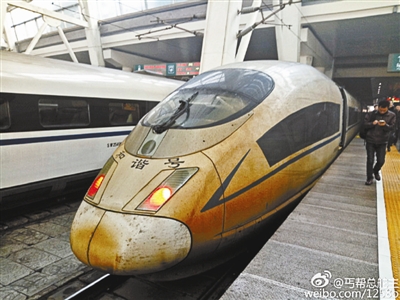
  Recently, netizens exposed a number of pictures of high-speed rail after crossing the smog, which triggered a hot discussion on the Internet. On the afternoon of January 3, Beijing Youth Daily reporter saw at Beijing South Railway Station that several stopped high-speed trains had different degrees of dust on their body skins. In this regard, the staff of the railway department said that the arrival of smog will indeed aggravate the dirtiness of the car body, but there are also other factors.

  Net exposure: smog continues to appear "discoloration" of high-speed trains.

  On January 2, an online article entitled "This is a high-speed train passing through the smog area" said that a high-speed train from Shanghai to Beijing South Railway Station was not washed by rain after passing through all the heavy smog areas in East China and North China, and the dust was all over the car body.

  On the 4th, some netizens said that the high-speed train from Xuzhou to Beijing turned "golden" after reaching its destination. The netizen described to the reporter of Beiqing Daily, "Like smog, the whole body is very dirty, but it does not rule out that the number of train cleaning is reduced because of the bad weather."

  On the afternoon of the 3rd, Beijing Youth Daily reporter came to Beijing South Railway Station and saw a G161 train from Beijing Nankai to Anqing. There was dust on the outside of the car body, especially at the top, but it was not as serious as the train from Shanghai to Beijing. At the same time, there are different degrees of dust in the car bodies of several trains parked nearby.

  Railway: Smog will aggravate the dirtiness of the car body

  Is smog really the "initiator" of dust outside the high-speed rail body? In this regard, a staff member of the railway department told the reporter of Beiqing Daily that there is a certain relationship between car body dust and smog, and the appearance of smog will indeed aggravate the degree of car body dirty. However, the situation of different trains is different, which is related to speed, distance, driving time and driving direction. Fog and haze are heavy these days, and the car body will be dirtier.

  For example, the staff said that the cleanliness of the outer skin of the Beijing-Tianjin intercity train was better than that of other trains on a smoggy day, mainly because of the short journey. All the trains between Beijing and Tianjin have always been scrubbed on the platform after arriving at Beijing South Railway Station to ensure that the trains leaving Beijing South Railway Station are clean. Under normal circumstances, some long-distance trains drive thousands of kilometers, which may also lead to dirty bodies due to the comprehensive factors such as weather and speed on the way. When the smog is serious, it will indeed aggravate the degree of dirty car body. In addition, the staff of the railway department also said that in general, in the morning and evening, the fog is relatively large and the relative dirty degree will be more serious.

  A ground mechanic in the Beijing EMU section of Beijing Railway Bureau told the reporter of Beiqing Daily that the EMU is divided into eight groups and sixteen groups. Whenever the EMU arrives at the station after completing the mission of the day, a special person will send it to each moving garage, and each cleaner will be responsible for the cleaning of two or three cars. "Generally, it takes about 30 minutes to clean once, but this smog really makes cleaning more difficult and takes more time."

  According to a staff member of Beijing South Railway Station, at present, all the buses that arrive at Beijing South Railway Station (they will leave for a new destination ten minutes after arrival) are wiped by special personnel before driving, so that the trains can get on the road cleanly. At the same time, the EMU trains that return to the garage for maintenance every day should also be cleaned. On days with severe smog, the railway department will send extra personnel to clean and wipe all sensitive parts of the train to ensure the safety of train operation.

  Expert: If the distance is long, pollutants are easy to attach to the car body and produce traces.

  Ma Jun, director of Beijing Public Environmental Research Center, said in an interview with Beiqing Daily that haze is actually an aerosol, and its pollutants are easily attached to the car body after absorbing water vapor and expanding. The recent smog is not only "high haze", but also "high humidity". In the high humidity state, if the train travels a long distance and passes through a severe smog area, pollutants will be attached to the car body, which will produce pollution traces. "It can basically be confirmed that it is caused by smog, but there is a premise for this statement." The premise mentioned by Director Ma means that the train has been cleaned regularly. If it has not been cleaned for a long time, it cannot be proved that the dust is caused by smog.

  Text/reporter Wang Wei Trainee reporter Shi Jia

The Open Character of a City —— Shanghai Path to Promote High-quality Development (Part Two)

   [A magnificent new era of 70 years of struggle — — Promote high-quality development research bank]

  Guangming Daily reporter Shang Jie Yan Weiqi Xu Danlu

  A city has the character of a city.

  "The reason why Shanghai has developed so well is closely related to its open character, open advantages and open actions." On November 5, 2018, at the opening ceremony of the first China International Import Expo, General Secretary of the Supreme Leader introduced Shanghai to the heads of 172 countries, regions and international organizations.

  Shanghai, which should be born and prospered by opening up, has been leading the national opening-up trend since the founding of New China, especially after the reform and opening up. In the process of promoting a new round of high-level opening up all over the country, how can Shanghai continue to be the vanguard of national reform and opening up, play the role of pioneer, demonstration and breakthrough, and expand space and stimulate motivation for promoting high-quality development?

  Shanghai is exploring and practicing.

  The open field is constantly expanding.

  The opening-up of China’s financial industry started in Shanghai. The first foreign bank and the first foreign insurance company in China were born here.

  On April 10th, in the Shanghai Representative Office of Huaihai Middle Road, Nomura Oriental International Securities was in full swing to prepare for its opening. As the first domestic application and the first batch of newly established foreign-controlled securities firms, Nomura Holdings Co., Ltd. from Japan plans to hold 51% of the shares.

  On the same day, Junkang Iiyama, executive chairman of Nomura Holdings Asia (excluding Japan) and chairman of China Committee, said that Nomura set up a representative office in Shanghai in 1980s and has been a witness and participant in the opening-up of China’s financial industry. "At the Boao Forum last year, as a representative of the participating enterprises, I felt the confidence and determination of China to further expand the opening of the financial industry." Fortunately, we can seize the opportunity of China’s new round of opening to the outside world, and Shanghai is always at the forefront of opening to the outside world. Nomura is full of confidence in the future.

  Not only in finance and securities, but also in education and medical care, which are closely related to citizens’ lives, Shanghai has also taken a new step of opening up.

  Shanghai Yongxing Gynecology Hospital, located in Waigaoqiao Free Trade Zone, is the first wholly foreign-owned hospital in China. The settlement of this "foreign hospital" benefited from the pilot of the Shanghai Free Trade Zone. In 2013 and 2014, the Shanghai Free Trade Zone released the restrictions on the establishment of wholly foreign-owned medical institutions and the total investment, which made Japan Yongxing Group see the opportunity.

  "At the end of 2014, we applied for running the hospital. At that time, many people reminded that in China, a permit had to run many departments and cover more than a dozen chapters. We were worried that we couldn’t handle it, so we hired a consulting company for guidance at a cost of $20,000. In the process of actual settlement, the Free Trade Zone Management Committee and Pudong New Area supported it in many ways, and the bid was particularly smooth. The US$ 20,000 was a waste. " Fan Yu, president of the hospital, said with a smile.

  In the past two years, the first similar "foreign institutions" have sprung up in Shanghai: the first wholly foreign-owned credit investigation and rating agency — — Moody’s (China) Co., Ltd., the first wholly foreign-owned vocational training institution — — PricewaterhouseCoopers Business Skills Training (Shanghai) Co., Ltd., the first wholly foreign-owned travel agency — — Yixin Dalv (Shanghai) International Travel Service Co., Ltd., the first wholly foreign-owned performance agency — — "Bandai Nanmenggong (Shanghai) Interactive Entertainment Co., Ltd." … … In 2018 alone, there were 413 new service industry expansion and opening-up projects in Shanghai, and a large number of projects were officially put into operation, which stimulated the vitality of the market.

  Behind the cluster of "foreign institutions", it is the result of Shanghai’s continuous relaxation of market access, steady opening-up of financial industry, service industry and manufacturing industry, continuous benchmarking of international first-class and optimization of business environment.

  Continuous optimization of open environment

  Expanding opening up on the basis of high-level opening up requires greater courage and boldness. In 2018, Shanghai formulated and implemented "100 measures for opening wider to the outside world", and put forward five aspects, 20 tasks and 100 measures for opening wider to the outside world, among which it was clearly proposed to deepen the opening up in key areas such as telecommunications, education, medical care and culture. At present, all 93 local powers have been implemented.

  The bottleneck problems encountered by some enterprises in their development have been solved. In recent years, taking advantage of the east wind of "One Belt, One Road" construction, the orders received by Volvo Construction Equipment China Headquarters have greatly increased, but it has encountered the problem of offshore settlement. Under the original supervision system, large-scale machinery should be sent directly to Africa from Korean factories, and the goods could not be settled in China without customs declaration. Enterprises have to bypass Singapore to complete it, which is time-consuming and laborious and increases costs.

  The Jinqiao Management Committee of Shanghai Free Trade Zone has learned this difficult problem, communicated and negotiated with the customs, the People’s Bank of China, the safe and other departments for many times, and solved this problem by building an information comprehensive platform and a "white list" system. Zhan Xu, vice president and director of the company, said that this move not only greatly saved the cost of the company, but also increased the offshore trade volume of the company by four times. More importantly, the Shanghai headquarters has obtained the international contract flow, income flow and capital flow, and changed from the original "paper headquarters" to a veritable headquarters.

  At the same time, Shanghai has made great efforts to deepen the business environment. In 2018, Shanghai launched 56 reform measures in one breath against the top ten evaluation indicators of the World Bank’s business environment, and completed two batches of 198 pilot projects of "separation of licenses" reform, with an average reduction of 30.5% in work links and 52.8% in work time. At present, more than 99% of new foreign investment and changes are handled by filing, and the processing time is reduced to three working days.

  More and more international enterprises feel the change. In July 2018, the Tesla Super Factory project was officially signed and settled in Shanghai. Five months later, the project was granted the construction permit, which achieved the signing, land acquisition and construction in the same year, and was praised by Tesla CEO elon musk as "amazing Shanghai speed".

  The continuous expansion of the open field and the continuous optimization of the open environment have attracted investors from all over the world. More than 50,000 foreign-funded enterprises have become an important force supporting Shanghai’s economic development. They account for 2% of the city’s enterprises, contributing 1/5 of Shanghai’s employment, 1/4 of GDP and 1/3 of tax revenue, and creating about 2/3 of the city’s foreign trade import and export and the total industrial output value above designated size.

  The scale of attracting investment continued to climb, the structure of attracting investment continued to be optimized, and the quantity and quality of the headquarters economy improved. As early as 2002, Shanghai took the lead in introducing the interim measures to encourage multinational companies to set up regional headquarters, which have been revised and improved many times in recent years to promote the scale and energy level of regional headquarters. By the end of 2018, Shanghai had settled in 677 headquarters of multinational companies and 444 foreign R&D centers, and the number of headquarters continued to lead the country. A large number of global leading multinational corporations have settled in Shanghai, showing a good trend of "being in Shanghai for the world".

  "Shanghai experience" is replicated and promoted to the whole country.

  In the "Double Eleven" in 2018, the number of cross-border e-commerce orders in Shanghai reached 2.75 million votes, reaching 1 million votes per hour at the peak, the transaction volume reached 390 million yuan that day, and the customs clearance rate reached 98.4%, basically achieving "second customs clearance". E-commerce companies such as Tmall and JD.COM reported that the processing efficiency of Shanghai Platform ranked first in China.

  Behind consumers’ enjoyment of "Happy Shopping" is Shanghai’s unremitting efforts to continuously strengthen the construction of an open platform.

  The declaration time for import and export goods is reduced from one day to half an hour; The entry and exit procedures for ships have been reduced from two days to two hours. On April 11th, at the Shanghai Port Center, the reporter experienced the convenience brought by the single window of international trade in China (Shanghai). Since the construction started in February 2014, it has been upgraded and improved many times. At present, this window connects 22 departments and serves 270,000 enterprises, saving enterprises more than 2 billion yuan every year.

  The establishment of a single window in international trade has turned the former manual errands into data running, and also made "information exchange, mutual recognition of supervision and mutual assistance in law enforcement" a reality. At present, this single window supports 1/3 of the country’s import and export trade volume and has become the largest single platform for the global import and export business. In 2015, the General Office of the State Council officially issued a document to promote the construction experience of Shanghai single window to the whole country.

  And this is just one of the "Shanghai experience" replicated and promoted by the Shanghai Free Trade Zone to the whole country.

  After the 1.0 version of the overall plan, the 2.0 version of the deepening plan and the 3.0 version of the comprehensive deepening plan, the Shanghai Free Trade Zone has always adhered to the pioneering and institutional innovation for five years, and more than 120 institutional innovations have been replicated and promoted nationwide. In particular, the national treatment plus negative list management model before foreign investment access has become the most thorough and widely implemented achievement of the free trade zone reform, which has been replicated and promoted throughout the country.

  China International Import Expo is another open platform that Shanghai focuses on. On April 12th, Liu Fuxue, deputy director of China International Import Expo Bureau and vice president of National Convention and Exhibition Center, introduced that compared with the first session, the exhibition area of the second session of enterprises will increase by 30,000 square meters, a unified release platform for new products, technologies and policies will be added, an outdoor exhibition hall for displaying large machinery and vehicles will be added, and a high-end consumer goods area & HELIP; … Shanghai has fulfilled its promise of "running a level, achieving results and getting better and better" with actions.

  Accelerate the construction of a global asset management center, accelerate the construction of an integrated platform in the Yangtze River Delta, and enlarge and strengthen the international import and export commodity display and trading platform … … Shanghai is focusing on building an international economic, financial, trade, shipping and scientific and technological innovation center, continuing to open to the outside world in an all-round way and enhancing its ability to allocate global resources.

  "In the new era, Shanghai has to undertake the new mission entrusted by the central government, and expanding opening up is the only way." Li Qiang, secretary of the Shanghai Municipal Party Committee, said that the promotion of Shanghai’s urban energy level depends on expanding openness to gather resource elements, and the enhancement of core competitiveness should be considered and practiced under open conditions. In the future development, Shanghai will continue to adhere to the policy of opening up and opening up, and strive to build Shanghai into a new round of all-round opening-up highland in China, a bridgehead serving the Belt and Road Initiative, an Asia-Pacific gateway for allocating global resources, and a strategic support for China’s approach to the center of the world stage, and take the lead in building a new pattern of all-round opening up.

  Guangming Daily (April 22, 2019, 01 edition)

Innovating "Experimental Fields" in Pilot Free Trade Zone, Promoting Institutional Opening, and Driving the National High-level Opening-up.

CCTV News:As a "test field" for institutional innovation, at present, China has set up 21 pilot free trade zones to further explore reform, opening up and economic development. Under the general tone of keeping the word steady and striving for progress in stability, how to build and upgrade the Pilot Free Trade Zone and how to promote institutional opening?

Entering the new year, the respective trade pilot zones have continuously promoted institutional opening-up measures, leading the country to open to the outside world at a high level.

On February 14th, in Lingang New Area of Shanghai Free Trade Zone, the pilot reform of high-level open foreign exchange management for cross-border trade and investment was officially launched, covering 9 capital account reform measures and 4 current account facilitation measures.

Zhang Xiaohong, Deputy Director of the Finance and Trade Department of the Management Committee of Lingang New Area of Shanghai Free Trade Zone:The pilot policy, such as supporting small and medium-sized micro-high-tech enterprises to borrow foreign debts, combined with the policy of supporting qualified enterprises’ tax relief in the new area, will further help improve the business environment and attract more high-tech enterprises to settle down.

Jinan District of Shandong Pilot Free Trade Zone has built a platform to provide digital trade services for China-Europe trains. Just after it was put into operation, it provided one-stop online services for more than 200 foreign trade enterprises, such as warehousing, booking and customs declaration. Through blockchain technology, a unique code is attached to the container, which can check the location of export goods online in real time and realize accurate supervision before shipment. 

On February 15th, Guangdong Province also issued 27 measures to promote trade and investment facilitation in the Free Trade Zone, proposing to support Hong Kong and Macao service providers to invest in the establishment of travel agencies, liberalize the international registration of statutory survey, and build the Guangzhou Futures Exchange with high standards.

On January 1, the negative list of foreign investment access in the Pilot Free Trade Zone was reduced for the seventh time, with the number of items reduced from the initial 190 to 27. The open field involved the first, second and third industries, the manufacturing items were cleared, and the service industry continued to expand and open.

Wu Hongliang, Deputy Director of the Foreign Investment Department of the National Development and Reform Commission:The new version of the negative list of foreign investment access has fully liberalized the manufacturing industry in the Pilot Free Trade Zone. At the same time, it has explored relaxing access restrictions in service industries such as market research in the Pilot Free Trade Zone, and accumulated experience for further expanding the opening up of telecommunications, medical care and other fields.

Carbon-neutral milk powder, zero-carbon vegetables … Have you ever eaten "zero-carbon food"?

Buying a dish can also reduce emissions? Can a glass of milk also reduce carbon?
Recently, many careful consumers have found that many zero-carbon foods have been "updated" on both e-commerce platforms and supermarket shelves. Compared with ordinary food, this kind of food labeled "zero carbon" and "carbon neutral" is much more expensive.
Since the beginning of this year, many food companies have entered the field of zero-carbon food. So, can zero-carbon food really reduce emissions? Do consumers buy a box of milk, a pack of vegetables and three meals a day, which are related to carbon emission reduction and carbon neutrality?
Many enterprises have entered the field of zero-carbon food.
On the morning of October 11th, Jimu journalist saw in Boxma Xiansheng, located in Crab Point, Wuchang District, Wuhan, that many fresh vegetables had a green circular logo on the outer packaging-labeled "Zero Carbon Agricultural Products". Compared with the prices of ordinary vegetables, the prices of these vegetables labeled as "zero-carbon agricultural products" are obviously higher. For example, a serving of 50 grams of coriander costs 7.9 yuan, and a serving of 350 grams of sweet and crisp corn costs 13.8 yuan.
Corn labeled with zero-carbon agricultural products in the box horse fresh supermarket (photographed by correspondent Wang Lu)
According to the relevant staff, organic vegetables with zero-carbon certification do not use chemical fertilizers and pesticides, and the net greenhouse gas emissions in the production process are zero. Every time consumers eat a pack of organic vegetables, they are helping to achieve the goal of "double carbon". Since June this year, Boxma stores have launched zero-carbon certified organic vegetables. "At present, there are about 15 kinds of zero-carbon agricultural products in Wuhan stores, and the sales volume has been good."
Subsequently, the reporter visited many other supermarkets in Wuhan. Although no agricultural products with zero-carbon certification were seen, some supermarket chains indicated that they had plans to introduce zero-carbon agricultural products in the near future.
According to the news reporters, many food companies have entered the field of zero-carbon food this year.
Promotional page of Nestle carbon neutral milk powder (screenshot)
In June, Nestle released the carbon-neutral product "Zhuochun Nengren 3 Organic Milk Powder". It is said that every can of this milk powder that consumers choose can help offset 14.2 kilograms of carbon emissions.
In August, Unilever started to build a carbon-neutral production base in South China in Guangzhou. In the next three years, it will gradually form the production capacity of zero-carbon products covering three categories: personal care products, food and ice cream.
"Zero-carbon food" must be recognized by professional organizations.
During the interview, many consumers questioned: Can carbon-neutral food taste the same as normal food? Will the nutritional value be greatly reduced?
In this regard, the College of Food Science and Technology of Huazhong Agricultural University believes that from the perspective of food supply, carbon neutrality of food is achieved by controlling carbon emissions in the whole process of food production, so it does not have much impact on the nutrition and taste of food itself. However, at this stage, the cost of zero-carbon food in research and development, harvesting, processing, sales, storage and other links is higher, so the price will be relatively high. At the same time, Xiang stressed that whether a food can be called carbon-neutral food needs to be recognized by a professional carbon emission exchange, and the relevant standards are still being explored and optimized.
It is also reported that since the beginning of this year, Jiangsu Provincial Market Supervision Bureau and Nanjing Guohuan Organic Products Certification Center Co., Ltd. have taken the lead in exploring the research on the carbon certification system of food agricultural products in China, formulated the Technical Specification for the Evaluation of Greenhouse Gas Emissions of Zero-carbon and Negative-carbon Agricultural Products, and obtained the certification qualification for the record in the State Administration of Market Supervision, creating a precedent for the formulation of certification standards for zero-carbon and negative-carbon agricultural products in China. At present, the province has carried out zero-carbon agricultural products certification in more than 30 agricultural products such as cowpea, eggplant, leek, pepper, pumpkin, chicken hair, wax gourd, lettuce, watermelon and blueberry.
"Due to the lack of relevant regulations and standards, some enterprises are likely to exaggerate or fail to truly reflect the emission reduction effect, and consumers will have no way to judge or misjudge." The industry believes that only after the standards are sound, enterprises that strictly abide by the standards will strengthen consumer trust and bring competitive advantages.
Reporting/feedback

[Walking into the old district to see the new look] Three Thousand Qifeng witnessed the great changes in the old district and spread the red culture among the green mountains and green waters.

CCTV News:From Luoxiao Mountain Range to Wuling Mountain Range, the mountains and mountains have left the footprints of the Red Army. Next, we will walk into Zhangjiajie, which is located in the northwest of Hunan. It is famous for its unique "3,000 Qifeng and 800 Xiushui", and it is one of the earliest tourist cities in China to go global. In addition to peerless scenery, it is also a "red fertile soil", which was once the core area of Hunan-Hubei border, Hunan-Hubei west and Hunan-Hubei-Sichuan-Guizhou base areas. Now Jiang Wenjing, a reporter from the General Station, is in Zhangjiajie National Forest Park. We will connect with her immediately to see what kind of "red story" there is in Zhangjiajie.

General Station reporter Jiang Wenzhao:At my feet, there is Jin Bianxi, a famous scenic spot in Zhangjiajie. There is a Red Army Road here, which extends from this position behind me to the bottom of Golden Whip Rock. On November 21, 1935, the Red Sixth Army, which set out for the Long March, passed through Jin Bianxi and marched among these steep peaks, completing a key step in strategic shift. Nowadays, the plank road and the Red Army Bridge are built here to commemorate the Red Army. Groups of tourists come here to enjoy the beautiful scenery of Zhangjiajie and listen to the story of the Red Army again and again. According to reports, this year, the scenic spot also plans to further improve this "red tourism" route, create a "red education" classroom in nature, and let the "red culture" spread belt interweave between green mountains and green waters.

The revolutionary spirit left by the Red Army has become a family heirloom for the people’s officers in the old areas to start businesses. This year marks the 40th anniversary of the establishment of Zhangjiajie National Forest Park. I saw an old photo at the theme film exhibition arranged in the scenic spot. This photo was taken in 1977. At that time, due to deforestation and man-made destruction, the coverage rate of Zhangjiajie’s virgin forest was only 10.9%. After continuous afforestation and ecological protection, let’s take a look at the present. This photo was taken in the same location a few days ago, and we can see that the once barren hills have undergone earth-shaking changes.

Beautiful landscapes have brought tourism development, turned the old areas into scenic spots and become a paradise for all living things. Zhangjiajie is rich in wildlife resources. We have seen all kinds of wildlife in Jin Bianxi these days. Baby macaques born this spring are now lively and active, and all kinds of Jin Bianxi small fish can be seen in the clear stream. Now, popular science education activities are also being carried out here. We see a fun punch table here. If the children who come for a spring outing observe the animals and plants on the card in the scenic spot, they can ask their parents to take a photo with their mobile phones and finish punching.

The children all said that they saw the giant salamander. In fact, the scientific name of giant salamander is giant salamander, which lived on the earth 300 million years ago, so it is called "swimming living fossil". The giant salamander has extremely high requirements on the ecological environment, so it is regarded as an "indicator" of good ecological environment. Fortunately, the giant salamander can be seen in the wild in Zhangjiajie in recent years. By the stream, the staff of Zhangjiajie Giant Salamander Protection Center is leading the pupils to return a batch of giant salamanders from the conservation and breeding base to their original homes.

The giant salamanders we see now were born in 2017, and they are five years old this year. Compared with the average life span of giant salamanders, they are still equivalent to the youth of human beings. Giant salamander feels nervous easily, and when it is nervous, it will secrete mucus all over the body, so we will change the big pot into a small one when we release it. Now they are adapting to the temperature of the stream through the basin, and then putting them into the stream. They will look for caves or cracks to hide. Researchers tell us that spring and summer is the key period for the growth and development of giant salamanders. After being released, the patrol team will strengthen the 24-hour inspection, hoping that these giant salamanders can adapt to the wild environment as soon as possible and live well here.

China University of Science and Technology innovates the integration of science and education and builds an excellent scientific and technological innovation system-

  Recently, in the Laboratory of Machine Chemist of China University of Science and Technology, the robot Xiaolai is shuttling through various operating tables in an orderly way. This world’s first robot, which integrates reading literature, designing experiments, independent optimization and covering the whole process of chemical development, is vividly called "machine chemist" and was developed by Jiang Jun, a professor from the Department of Chemical Physics of the Chinese University of Science and Technology.

  From assembling the team in 2014, putting forward the concept, and finally landing the project, Jiang Jun’s team has sharpened a sword for ten years. This persistence is precisely the vivid epitome of China University of Science and Technology focusing on the national strategic needs, focusing on the direction of scientific development, based on a high position, broad vision and large pattern, and taking various measures to write "building a strong country and taking responsibility for education".

  Anchoring basic research to serve the national strategic needs

  In 1958, at the initiative of Guo Moruo, then president of China Academy of Sciences, and a group of scientists, the Chinese University of Science and Technology came into being. As a university founded for the cause of "two bombs and one satellite", serving the strategic needs of the country and cultivating cutting-edge scientific and technological talents for the party and the country are the innate value pursuit of the people of China University of Science and Technology.

  Shu Gequn, secretary of the Party Committee of the Chinese University of Science and Technology, said: "Over the years, the Chinese University of Science and Technology has taken advantage of the combination of departments, innovated the integration of science and education, shouldered the heavy responsibility of national strategic scientific and technological strength, consolidated the foundation of scientific and technological self-reliance, and achieved a large number of original scientific research results based on quantum technology, artificial intelligence and deep space."

  From "two bombs and one satellite" to the lunar exploration project; From large-scale space exploration to micro-scale quantum control; From the construction of synchrotron radiation accelerator to full participation in the construction of Hefei comprehensive national science center; From the opening of the world’s first thousand-kilometer quantum secure communication trunk line "Beijing-Shanghai trunk line" to the development of the world’s first optical quantum computing prototype … The Chinese University of Science and Technology has fulfilled the oath of "inserting the red flag into the peak of science" in the school song with one scientific and technological achievement.

  Recently, a research team composed of professors Pan Jianwei, Lu Chaoyang and Liu Naile from the Institute of Quantum Information and Quantum Science and Technology Innovation of China Academy of Sciences, Chinese University of Science and Technology, cooperated with Shanghai Institute of Microsystems of China Academy of Sciences and National Center for Parallel Computer Engineering and Technology, and successfully built a 255-photon quantum computing prototype "Nine Chapters No.3", which once again set a new world record for the technical level of optical quantum information and the superiority of quantum computing.

  Quantum science and technology is one of the important fields for China to seize the commanding heights of the future industry, and it is also the golden signboard of China University of Science and Technology. From Mozi, the world’s first experimental satellite for quantum science, to the prototype of quantum computing such as Jiuzhang and Zu Chongzhi, all started from the breakthrough of basic research bit by bit.

  "To do basic research, China University of Science and Technology has a tradition." Bao Xinhe, president of the Chinese University of Science and Technology, said that the school has always encouraged and supported basic research work, and "the bench is not cold in the Chinese University of Science and Technology".

  The landing of a series of mechanisms has effectively verified this point. The school has gradually established an organized scientific research model based on national laboratories, national research centers, scientific apparatus and other major platforms, which is oriented to serve the national strategic needs, and an outstanding scientific and technological innovation system based on colleges, supported by key experimental platforms, and focusing on free exploration.

  The school also deploys original exploration projects to guide and motivate researchers to participate in original basic research. The school set up multi-gradient university-level independent deployment projects by using the basic scientific research business expenses of central universities and the special funds for "double-first-class" construction, focusing on supporting key areas or major international scientific and technological frontiers in the medium and long-term scientific and technological development plan of the state and China Academy of Sciences.

  Through the innovation of system and mechanism, the Chinese University of Science and Technology focuses on promoting the cross-integration of five first-level disciplines: physics, chemistry, life science, information science and materials science, and further strengthening the construction of Hefei National Research Center for Microscale Material Science. The school will build the Geometry and Physics Research Center, the Peng Huanwu Theoretical Physics Research Center and the Anhui Applied Mathematics Center, etc., and strengthen the support for the frontier basic theoretical research work.

  Allow students to choose their own majors and lay a solid foundation for talent training.

  Talent training mode represents the characteristics and style of a school. Over the years, in terms of personnel training, the University of Science and Technology of China has formed a distinctive feature of "broad and solid foundation, fine professionalism and fresh work".

  "In terms of academics, we must have the ability to think independently." Bao Xinhe said that the Chinese University of Science and Technology has always adhered to the concept of teaching students in accordance with their aptitude, and basically there is no major direction when enrolling students. When attending the first to second grades, students can choose their own major and research direction according to their own interests and understanding of the subject. The school has set up a number of science and technology talent classes in basic science fields such as mathematics, physics, chemistry and life, and high-tech fields such as information and materials, which provide sufficient choice space for students’ development, basic research and interdisciplinary.

  Based on this, the University of Science and Technology of China has formed a distinctive "two-stage (organic integration of general education and professional education), three-combination (combination of science and education, combination of theory and practice, combination of departments), long-term (integration of undergraduate and doctoral studies), personalized (100% independent choice of majors) and international" top-notch innovative talent training model.

  In the University of Science and Technology of China, students should not only learn well, but also be given the right of autonomy-allowing students to choose their majors 100% independently. Undergraduates have three opportunities to choose their own majors during their school years: after one year of enrollment, they choose colleges or disciplines within the whole school according to their own interests; After the sophomore year, you can choose a major in a college or discipline; After the third grade, you can also make professional adjustments or study according to the personalized course plan.

  The free learning environment, solid theoretical foundation and rigorous study atmosphere fully stimulate students’ motivation to explore new knowledge, so that students can firmly establish their scientific research aspirations to do the most cutting-edge and difficult research and solve the problems that the country and people urgently need to solve.

  Accelerate the application of innovative achievements and serve economic and social development.

  In 1970, China University of Science and Technology moved south to Hefei. In the past 53 years, in the process of innovation and development of Hefei, the Chinese University of Science and Technology has been like a seed, spreading its branches and leaves, blossoming and bearing fruit. Many "Science and Technology Department" enterprises such as Iflytek, Keda Guodun and Keda Dachuang have grown rapidly in Hefei, forming industrial clusters and becoming industrial landmarks in Hefei.

  The orderly incubation of scientific research achievements in colleges and universities in the urban industrial chain benefits from the series of top-level designs of the school.

  In 2020, CUUST was included in the first batch of 40 pilot units for the reform of "giving scientific researchers the ownership or long-term use right of scientific and technological achievements", and formulated the Opinions on Further Strengthening the Transfer and Transformation of Scientific and Technological Achievements to explore the "Chinese University of Science and Technology Model" for the reform of "scientific and technological empowerment".

  Since the 18th National Congress of the Communist Party of China, China University of Science and Technology has promoted the formation of a number of emerging industrial clusters, such as sub-technology and new generation information technology, and contributed to the regional economic development.

  By the end of April 2023, the school had applied for more than 50 achievements to join the empowerment reform, approved the transformation of 31 achievements, involving 130 intellectual property rights, and established 25 high-quality entrepreneurial enterprises, covering a new generation of information technology, new materials, new energy, biomedicine and other fields. The Institute of Advanced Technology of the Chinese University of Science and Technology has cultivated 301 enterprises, including 90 national high-tech enterprises and 52 high-growth enterprises. It has formed an industrial innovation chain in the fields of independent informationization, artificial intelligence and biomedicine, and has become the technical engine of the regional high-tech industrial ecological chain.

  In Bao Xinhe’s view, a series of technologies are actually needed to push the innovation into application. Only when scientific and technological achievements are combined with national needs, people’s requirements and market demand, and the three-level leap from scientific research, experimental development to popularization and application can we truly realize innovation value and realize innovation-driven development. To this end, in recent years, the school has continuously strengthened the top-level design to help the transformation of scientific research results.

  In close connection with the country’s major strategic needs and the need to focus on basic research and key core technologies, CUUST supports the school’s scientific research team to "open its arms" and make bold innovations by exploring the establishment of key youth innovation funds, innovative team cultivation funds, original exploration funds, and "unveiling the list" projects.

  In 2020, the state put forward the strategic goal of carbon neutrality in peak carbon dioxide emissions. Two years later, the Institute of Carbon Neutralization was established. With the support of the Institute, young professor Xu Jixian undertook the key project "Development of the next generation crystalline silicon laminated solar cell technology". "The Chinese University of Science and Technology encourages young people to’ expose the list’. The list of’ exposing the list’ comes from the real problems and real needs in industrial operation and enterprise development." Talking about the precise help given by the school in direction guidance and the financial support provided in team building, Xu Jixian felt deeply.

  Not long ago, the achievements of Xu Jixian’s team in perovskite photovoltaic research set a new world record and became the latest achievement under the continuous exploration of "the next generation of crystalline silicon-perovskite laminated battery".

  "We must have determination and determination, adhere to stable support, encourage continuous scientific research and exploration, adhere to innovation management, and create a good atmosphere, so as to better play the supporting and promoting role of scientific and technological innovation in high-quality development and serve the country’s major needs and economic and social development." Shu Gequn said. (Reporter Fang Mengyu)