Xiaomi informed of internal corruption and two employees were transferred to the public security; The electronic cigarette "JUUL" will officially enter the China market; The fourth batch of imported g

On July 19th, Xiaomi reported that two employees of China Marketing Department had been dismissed and transferred to the public security organs for irregularities. According to the notification email, Xiaomi investigated and dealt with many cases of employee irregularities and fraud in the first half of 2019. Among them, Hao Liang, a former employee of China Marketing Department, took advantage of his position to entrust the company’s business to a company held by his close relatives; Zhao Qian, a former employee of China Marketing Department, took advantage of his position to ask the cooperative suppliers for a large amount of benefits.
According to the email, Xiaomi has made two decisions: dismissal and never employment; Refund unjust enrichment, confiscate all options and transfer them to public security organs for handling; Join the blacklist of employee dishonesty. Among them, Zhao Qian has been arrested by the public security organs for allegedly accepting bribes from non-state personnel. In response to this notification, Xiaomi officially did not respond. (Source: Sina Technology)
On July 19th, according to foreign media ET tech, Ritesh Agarwa (Chinese name Tae-Hee Lee), founder and group CEO of OYO Hotels&Homes, is buying back equity worth $2 billion from the old shareholders. It is reported that this move (bought by the management led by the founder) is unprecedented among Indian start-ups, and it is expected to help Tae-Hee Lee increase its shareholding ratio from the current 10% to around 30%. If the shares held by management and employees are included, this proportion may further rise to 32-33%.
Once the changes in equity is completed, Tae-Hee Lee and OYO management will become the second largest shareholder after Softbank Vision Fund. Softbank Vision Fund holds nearly 48% of the company’s shares, but according to the terms set by OYO, Softbank Vision’s shareholding ratio cannot exceed 49.9% without the approval of Tae-Hee Lee, Sequoia Capital, Lightspeed Venture Capital and Greenoaks Capital. (Source: 36Kr)

On July 20th, it was reported in Washington Post that the US Federal Trade Commission (FTC) had reached a settlement with Google, announcing the end of the investigation on YouTube’s violation of the federal children’s data privacy law. According to people familiar with the matter, the settlement agreement, which was supported by three Republicans and opposed by two Democrats in FTC, concluded that Google failed to adequately protect children who used its video streaming service and improperly collected their information, which violated the Children’s Online Privacy Protection Act (COPPA), which prohibits users under the age of 13 from being tracked and targeted.
Google is expected to pay millions of dollars in fines, but the exact amount and terms of its settlement with FTC are still unclear. The case has now been handed over to the US Department of Justice, which rarely rejects the settlement agreement reached by FTC and the companies under its supervision. (source: PingWest)
On July 19th, Chen Lifang, director and senior vice president of Huawei, said on Thursday that the company’s HarmonyOS operating system is not designed for smartphones, and the company intends to continue to use Google’s Android operating system on its smartphones. Recently, the HarmonyOS operating system trademark officially submitted is mainly for industrial use.
Chen Lifang also talked about two characteristics of the HarmonyOS system. The main feature is that the delay is very low, from millisecond to sub-millisecond level. The second feature is extremely safe. The HarmonyOS system adopts the leading architecture and is very safe. (Source: Xinhua News Agency)

On July 19th, the BBC ITV (Independent Television) announced that the streaming service BritBox, which is jointly created by the company and BBC, will be launched at the end of this year, with a monthly cost of only 5.99 pounds (about 7.50 US dollars).

As a product jointly launched by the two largest broadcasters in the UK, BritBox will undoubtedly compete with online streaming services such as Netflix. After the news was released, ITV’s share price once rose by 2%. ITV said that subscribing to BritBox will allow users to watch HDTV programs on multiple screens and devices (Source: Tencent Technology).
On July 19th, Softbank Group announced that its venture capital department, which is headquartered in Seoul and focuses on early investment, has raised 317 billion won (about 270 million US dollars).
The venture capital department of Softbank is called "SoftBank Ventures Asia", and this new fund will be mainly used to invest in startups in the initial stage of development around the world, but mainly in Asian startups. Softbank said that the goal of this new fund is to reach a deal with investors including Korea National Pension Service Corporation (NSA) in the next six months. Analysts said that this move shows that Softbank has rekindled its interest in early investment. (Source: Tencent Technology)
On July 19th, it was reported that CAPE Company, a supplier of UAV technology for US multi-state law enforcement agencies and some other US public security agencies, recently announced that it would stop cooperating with Chinese UAV manufacturer DJI, citing safety issues. In this regard, DJI responded that he was disappointed with CAPE’s decision based on misinformation, and said that it would not affect DJI’s continued development of customers and partnerships around the world. More than 520 public security agencies around the world trust and use DJI’s UAV products to perform key tasks. (Source: Observer Network)
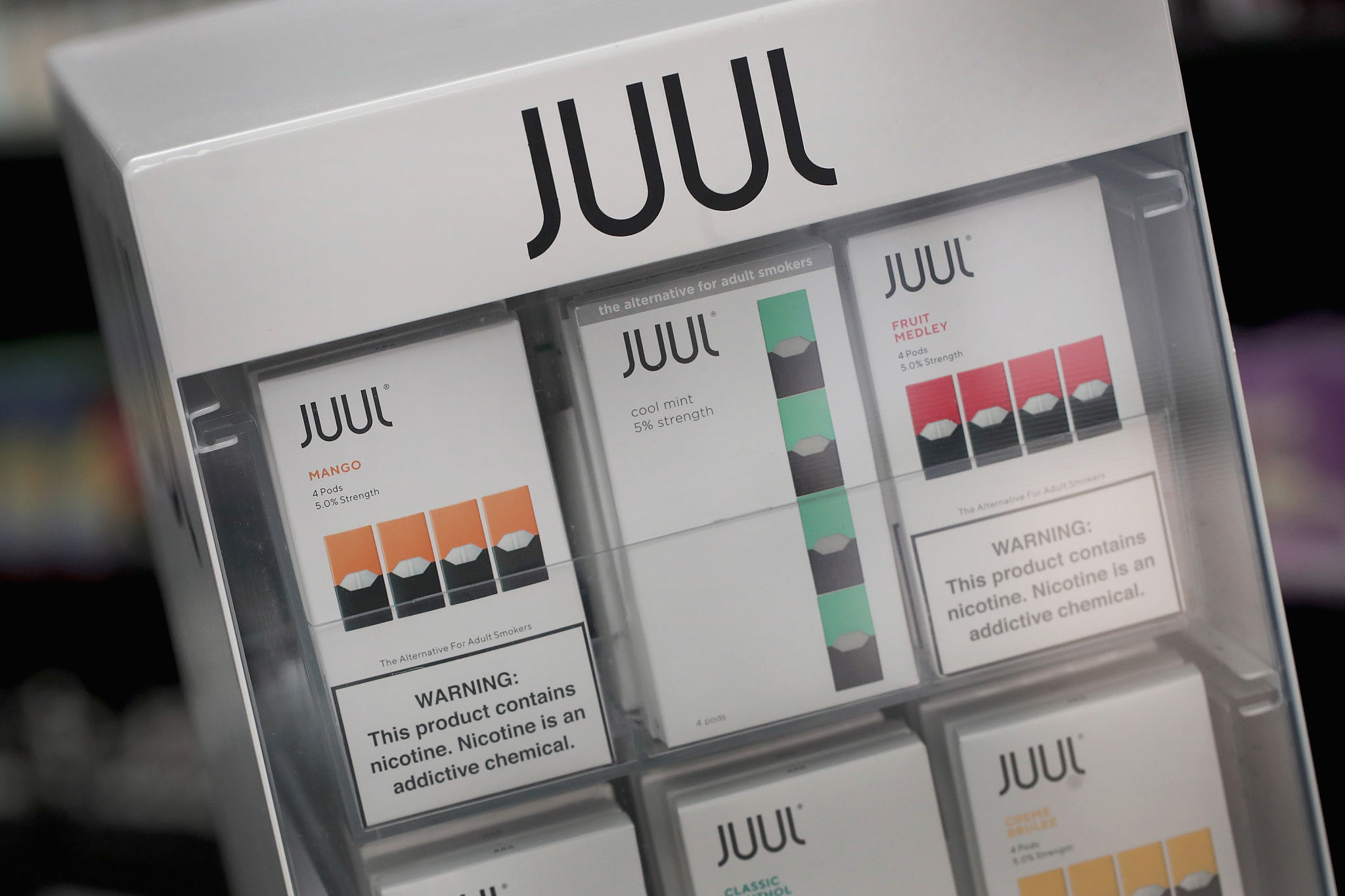
On July 19th, it was reported that the American e-cigarette brand "JUUL" will formally enter the China market and has reached a strategic cooperation with JD.COM. In October this year at the latest, JUUL electronic cigarette products will be put on the e-commerce platform in JD.COM. In addition, JUUL plans to put at least $100 million into the market for brand building and marketing within 15 months. According to a person close to the news, JUUL began to study the China market as early as 2016, but its plan to enter China was shelved because the domestic small cigarette industry had not yet formed. (Source: 36Kr)
On July 19 th, the official of the former State Administration of Press, Publication, Radio, Film and Television showed that the fourth batch of imported game version numbers had been issued this year, with a total of 24. Netease’s Live: The Gathering of Kings, Xuanyuan Sword Dragon Dancing in Yunshan and Tencent’s Rocket League and Ace Warrior were approved. In addition, many popular games such as "Wild Racing 9: Racing Legend" operated by Beijing Wansheng Hetai Technology Co., Ltd. and "Track in the Air" operated by Beijing Changyou Times Digital Technology Co., Ltd. are also listed here. Previously, there have been three batches of 75 imported games with version numbers. (source: PingWest)
On July 19th, it was reported that after the popularity of Tik Tok, various kinds of "business-shaking" trainings have sprung up in various places, one of which is to make false propaganda after charging high fees, and the other is direct fraud. A few days ago, Tik Tok sued Hangzhou Shashang Technology Co., Ltd., Hangzhou Shayou Cultural and Creative Co., Ltd., Zhenzhiba Technology Co., Ltd., Yang Zhan and other organizers of the Shashang Conference in Hangzhou Internet Court. The above four defendants are required to immediately stop trademark infringement and unfair competition, apologize, eliminate the influence and compensate economic losses of 3 million yuan. It is understood that this is the first time that the Tik Tok authorities have initiated a lawsuit against the activities of "shaking business".
Tik Tok said that on December 17th, 2018, the four defendants held the kick-off meeting of Shashang Group and Shashang 10,000-member Alliance in Hangzhou. The four defendants claimed that the event had "mysterious guests-Tik Tok headquarters executives to help out" and "Tik Tok headquarters big coffee sharing", and listed "Tik Tok" as a cooperative media and displayed the nameplate of "authorized agent" at the event site. (Source: Securities Daily)
On July 19th, JD.COM New Access Road and 58 Home held a signing ceremony for strategic cooperation, officially opening the strategic cooperation of on-site service business. In the future, consumers can not only buy physical goods in convenience stores in JD.COM, but also enjoy more than 20 kinds of door-to-door services provided by 58 households, including baby-rearing, moving, door-to-door installation, home appliance repair and unlocking.
Up to now, JD.COM convenience stores in 34 cities in China, such as Beijing, Shanghai, Tianjin, Chongqing, Guangzhou and Shenzhen, have been connected to 58 home service systems. At the same time, the business will also be fully open to users of Jingdong Treasurer. (Source: DoNews)
On July 19th, BYD officially announced that BYD and Toyota had reached a cooperation on the joint development of electric vehicles, and started to discuss the development of pure electric vehicles and power batteries together. The two parties indicated that the future products include pure electric vehicles for cars and low-chassis SUVs, and they plan to put them on the China market before 2025. At the same time, the two parties will jointly develop the power batteries needed for the above-mentioned vehicles. (Source: Beijing News)

On July 19th, Samsung announced that it has started mass production of 12 Gigabit LPDDR5 DRAM chips, aiming at "supporting 5G and AI functions in future smartphones". Samsung’s DRAM can be found not only in its own Galaxy series of mobile phones and tablets, but also in Apple’s iPhone and its rival Android devices.
The new LPDDR R5 chip provides a data rate of 5500Mbps, which is about 30% higher than the LPDDR 4X (4,266 Mbps) used by today’s high-end smartphones, including the first batch of 5G smartphones based on Qualcomm Snapdragon 855 processor. Samsung said that the new DRAM will support ultra-high definition video recording and AI-driven machine learning function, which greatly improves the battery life of the device and reduces power consumption by 30% compared with the previous DRAM.
The higher speed of LPDDR5 will depend on the next generation of mobile processors, which can transmit 44GB of data per second, enough to store 12 1080p movies. The reason why this speed can be achieved is that Samsung bundled eight 12 Gigabit LPDDR5 chips and packaged them as 12GB chip modules. Samsung said that this process will begin later this month, following the production of 6GB chip modules started last month. The company plans to launch 16 Gigabit LPDDR5 chips next year. (Source: Tencent Technology)
On July 19th, according to AppleInsider, a US technology website, He Limei, chief financial officer (CFO) of TSMC, said yesterday that TSMC’s 5-nanometer manufacturing process is expected to be mass-produced in the first half of 2020, which means that Apple’s next-generation A-series processors will take the lead in adopting the 5-nanometer manufacturing process. For Apple, the current generation of A12 processor is manufactured by 7 nm process. It is expected that the A13 processor launched this autumn will remain at this level, and the A14 processor in next autumn will most likely adopt TSMC’s 5 nm manufacturing process. (Source: Sina Technology)
On July 19th, MediaTek, a chip designer, said at a 5G salon that MediaTek’s latest 5G SOC single chip adopted a 7nm process, including A77 and G77, the latest APU3.0 and M70 modem. This SOC will be sent to major customers in Q3 this year, and the first batch of terminals equipped with 5G SOC will be launched in the first quarter of next year. (Source: Tencent Technology)


On July 19th, it was the 50th anniversary of human landing on the moon. The original instructions of the Apollo 11 Guidance Computer (AGC) and the source code of the moon landing module have been opened on GitHub website. According to the introduction, the open source content includes the original codes of the command module (Comanche055) and the moon landing module (Luminary099) in the Apollo 11 guidance computer (AGC). By virtual AGC and MIT science museum guys to complete the electronic. Apollo 11 original code GitHub Address: https://github.com/chrislgarry/Apollo-11 (Source: IT House)
Image source: vision china